
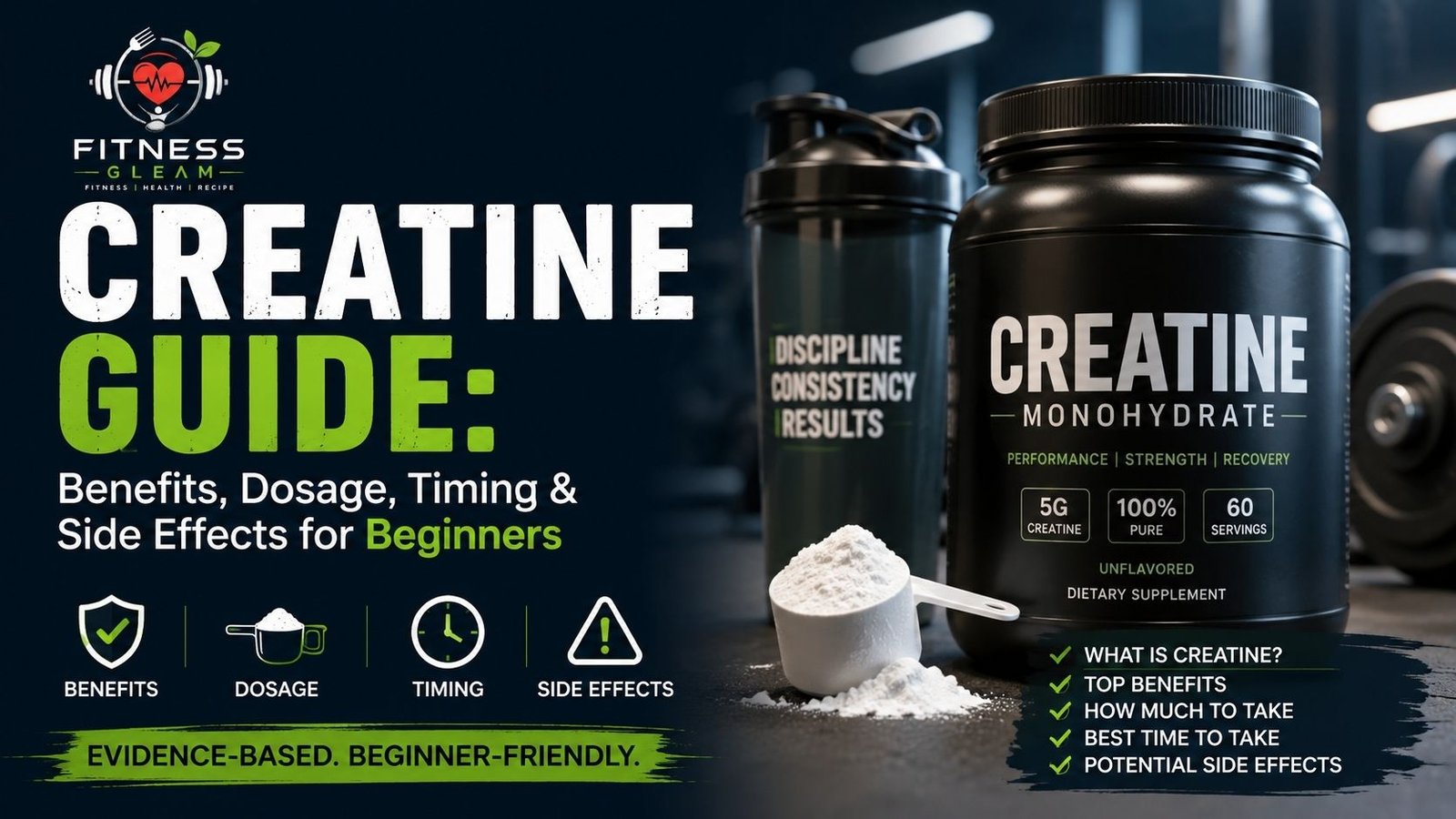
Creatine is one of the most researched supplements in sports nutrition — and one of the most misunderstood. If you’ve searched anything about it recently, you’ve probably run into conflicting advice: how much to take, when to take it, whether it’s safe, and whether it’s even worth it. This guide covers exactly what you need to know, based on what people are actually asking right now.
What Is Creatine?
Creatine is a natural compound your body produces in the liver and kidneys, and stores mainly in your muscles. You also get small amounts from foods like red meat and fish. It helps your muscles produce energy quickly during short, intense bursts of effort — think heavy lifts, sprints, or explosive movements. Supplementing with creatine simply tops up your body’s natural stores beyond what diet alone typically provides.
How Much Creatine Should You Take a Day?
This is the single most-searched question about creatine right now, so let’s answer it directly.
Standard maintenance dose: 3–5 grams per day.
This is the amount most research supports for building up and maintaining elevated muscle creatine stores over time. You can take it every day, including rest days — creatine works by saturation, not by timing around workouts.
Optional loading phase: 20 grams per day, split into 4 doses of 5g each, for 5–7 days.
A loading phase saturates your muscles with creatine faster, but it’s optional — not required. If you skip it and just take 3–5g daily from day one, you’ll reach the same saturation point, it just takes a few weeks longer instead of a week. Most beginners are better off skipping the loading phase and just starting with the maintenance dose; it’s simpler and avoids the mild bloating some people experience during loading.
When Is the Best Time to Take Creatine?
Short answer: it doesn’t matter as much as you’d think.
Some research suggests a slight edge to taking creatine after a workout rather than before, since post-workout blood flow to muscles may support absorption slightly better. But the difference is small, and several studies show no meaningful difference either way.
What actually matters is consistency.
Creatine works through steady saturation of your muscle stores over time — not through a single well-timed dose. Pick a time you’ll realistically stick to every day (with your protein shake, with breakfast, right after training) and keep it consistent rather than chasing the theoretically “perfect” window.
Creatine vs. Creatinine — Don’t Confuse the Two
This trips up a lot of people, and it’s worth clearing up directly.
- Creatine is the supplement — the compound you take to support muscle energy and performance.
- Creatinine is a completely different thing: a waste product your body naturally produces when it breaks down creatine (and creatine phosphate) in your muscles. Doctors measure creatinine levels in blood tests as a marker of kidney function, because healthy kidneys filter it out at a predictable rate.
Here’s the part that confuses people: taking creatine supplements can raise your creatinine levels on a blood test, without actually indicating any kidney damage. This is a well-documented, harmless effect of increased creatine turnover in your muscles — it’s not a sign that your kidneys are struggling, in people with healthy kidney function to begin with.
Practical takeaway: if you’re taking creatine and have upcoming bloodwork, it’s worth mentioning to your doctor. A slightly elevated creatinine reading in a creatine user isn’t automatically a red flag, but your doctor will interpret it correctly if they know you’re supplementing.
Is Creatine Bad for You?
For healthy adults, creatine monohydrate has an excellent safety record. It’s one of the most studied supplements in sports nutrition, with decades of research behind it, and most people tolerate it well at standard doses.
Common, minor side effects:
- Mild water retention or bloating, especially during a loading phase
- Occasional stomach discomfort if taken on an empty stomach or in large single doses
Who should be cautious:
- People with pre-existing kidney disease or kidney function concerns should talk to a doctor before starting
- Anyone on medication that affects kidney function should check with a healthcare provider first
For the general healthy population, current evidence doesn’t support the idea that standard-dose creatine supplementation harms healthy kidneys.
Does Creatine Make You Gain Weight?
Yes — typically 1 to 3 pounds within the first week or two. This surprises a lot of first-time users, but it’s important to understand what’s actually happening.
This initial weight gain is water retention inside your muscle cells, not fat gain. Creatine draws water into your muscle tissue as part of how it works — and that increased intracellular water is actually part of the mechanism that supports muscle performance and growth over time. It’s not bloating in the uncomfortable sense; it’s a sign the supplement is doing what it’s supposed to do.
Creatine Benefits
- Strength and power output: Creatine’s most well-established benefit is improved performance in short, high-intensity efforts — heavier lifts, more explosive power, and often the ability to squeeze out a few extra reps per set.
- Muscle growth support: Creatine doesn’t build muscle directly, but by letting you train harder and recover faster between sets, it supports the kind of progressive overload that drives muscle growth over time.
- Cognitive and brain health: Newer research is exploring creatine’s role beyond the gym — early studies suggest possible benefits for mental fatigue and cognitive performance, particularly under conditions like sleep deprivation. This research area is still developing, so consider it a promising secondary benefit rather than a primary reason to supplement.
Creatine for Women — Including Women Over 40 and 50
Interest in creatine among women has grown significantly, and for good reason — the benefits extend well beyond bodybuilding.
- Strength and lean muscle preservation: Muscle mass naturally declines with age, and this accelerates around menopause due to hormonal shifts. Creatine, combined with resistance training, can help preserve strength and lean muscle during this transition.
- Bone density support: Some research suggests creatine may support bone health when paired with resistance training — a genuinely underexplored benefit that’s especially relevant for women navigating the bone density changes that come with perimenopause and menopause.
- Cognitive benefits during hormonal changes: The same cognitive research showing promise for mental fatigue and focus may be particularly relevant during perimenopause and menopause, when many women report brain fog and concentration changes.
- Dosing note: there’s no separate “women’s dose” — the same 3–5g daily maintenance guidance applies regardless of gender. Be cautious of products marketed with unnecessarily complicated or inflated dosing specifically aimed at women; the underlying science doesn’t support a different amount.
Creatine for Men
For men, creatine remains best known for its strength, power, and muscle-building support — and that reputation is well earned. If you’re training with resistance work 3+ times a week, creatine is one of the few supplements with genuinely strong research behind it for supporting those goals. The same 3–5g daily dosing and timing guidance above applies.
Creatine Gummies vs. Powder
Creatine gummies have grown in popularity as a more convenient, easier-to-take alternative to mixing powder into water. A few things worth knowing before you switch:
- Cost per gram is usually higher with gummies compared to plain creatine monohydrate powder
- Check the label for added sugar — some gummy formats include more than you’d expect
- Powder (specifically creatine monohydrate) remains the most researched, most cost-effective form — gummies are a convenience trade-off, not a performance upgrade
If taste or convenience is the only thing stopping you from taking creatine consistently, gummies are a reasonable option. If cost and getting the most researched form matter more to you, plain monohydrate powder is still the standard.
Frequently Asked Questions
How much creatine should I take a day?
3–5 grams per day is the standard, research-backed maintenance dose. An optional loading phase of 20g/day (split into 4 doses) for 5–7 days can saturate your muscles faster, but it’s not required — skipping it just means reaching full saturation over a few weeks instead of one.
Is creatine bad for you?
For healthy adults, creatine monohydrate has a strong safety record and is one of the most researched supplements available. Minor side effects like water retention or mild stomach discomfort can occur. People with pre-existing kidney conditions should consult a doctor before starting.
Does creatine make you gain weight?
Yes, typically 1–3 pounds in the first week or two — but this is water retention inside your muscle cells, not fat gain, and it’s part of how creatine supports muscle performance.
What’s the difference between creatine and creatinine?
Creatine is the supplement you take for muscle energy and performance. Creatinine is a waste product your body makes when breaking down creatine, used by doctors as a kidney-function marker in blood tests. Creatine supplementation can raise creatinine readings without indicating actual kidney damage in people with healthy kidneys.
When is the best time to take creatine?
Timing matters far less than consistency. Some research shows a slight edge to post-workout timing, but the difference is small — pick a time you’ll take it every day and stick with it.
The information on this page is for educational purposes only and does not constitute medical advice. Please consult a healthcare professional before starting any new supplement, especially if you have pre-existing health conditions.